


Dhaka, June 9, 2026
Bangladesh and Japan on Monday signed agreements for a Japanese Official Development Assistance (ODA) loan worth up to 50 billion yen (approximately US$312 million) aimed at strengthening Bangladesh’s economic resilience and ensuring a stable energy supply amid global economic uncertainties.
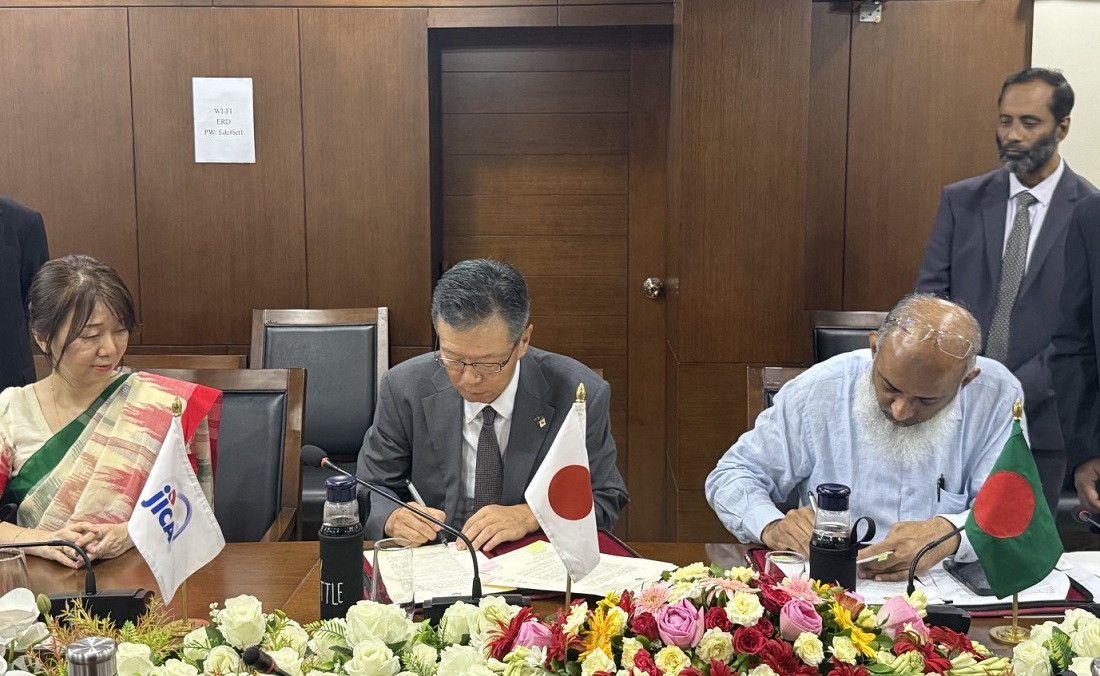
The Exchange of Notes was signed in Dhaka by Japanese Ambassador to Bangladesh Saida Shinichi and Economic Relations Division (ERD) Secretary Md. Shahriar Kader Siddiky. Subsequently, JICA Bangladesh Chief Representative Takahashi Junko and the ERD Secretary signed the loan agreement.
The emergency support package, co-financed by the Asian Development Bank (ADB), is designed to help Bangladesh address the socio-economic impacts of rising global energy prices and supply uncertainties linked to the deteriorating situation in the Middle East.
Under the programme, Japan will support Bangladesh’s efforts to strengthen fiscal management, improve the investment climate, and maintain a stable energy supply—key factors for sustaining economic stability and long-term growth.
Speaking at the signing ceremony, Ambassador Saida described the agreement as a reflection of Japan’s enduring partnership with Bangladesh. He reaffirmed Japan’s commitment to supporting Bangladesh’s stability, prosperity and sustainable development under the bilateral Strategic Partnership framework.
The loan also marks the first Japanese ODA project under “POWERR Asia,” a regional initiative launched in April 2026 to enhance energy and resource resilience across Asia through emergency assistance and long-term structural cooperation.
Officials said the support is expected to bolster Bangladesh’s economic and energy security while strengthening regional supply chains and expanding cooperation in infrastructure, energy, trade, investment, and human resource development between the two countries.

